
Table of Contents
- The Real Cost of a Recycled Rug: What You're Actually Paying For
- Benefits of Recycled PET Rugs: Sustainability Meets Practicality
- Recycled Rug Durability vs Wool: Which Lasts Longer?
- How to Clean Recycled Plastic Rugs (Without Damaging Them)
- Health, Safety, and Indoor Air Quality: What You Need to Know
- Texture, Comfort, and the 'Plastic' Myth
- Indoor vs Outdoor: Weather Resistance and UV Protection
- End-of-Life Recyclability and the Circular Economy
- Frequently Asked Questions
Last Updated: September 16, 2026
The Real Cost of a Recycled Rug: What You're Actually Paying For
A recycled rug usually costs more than a mass-produced synthetic floor covering, and the honest reason is that you are paying for denser weaving, better raw material processing, and a product designed to survive years of foot traffic rather than one season. At Weaver Green Australia, we explain it simply: the price reflects how the rug is made, not just what it is made from.
Whether recycled rugs are worth the price comes down to cost-per-use, not sticker price. A cheap rug replaced every 18 months costs more over five years than a well-made one that lasts a decade. That maths is the whole argument, and it is the one most buying guides skip.
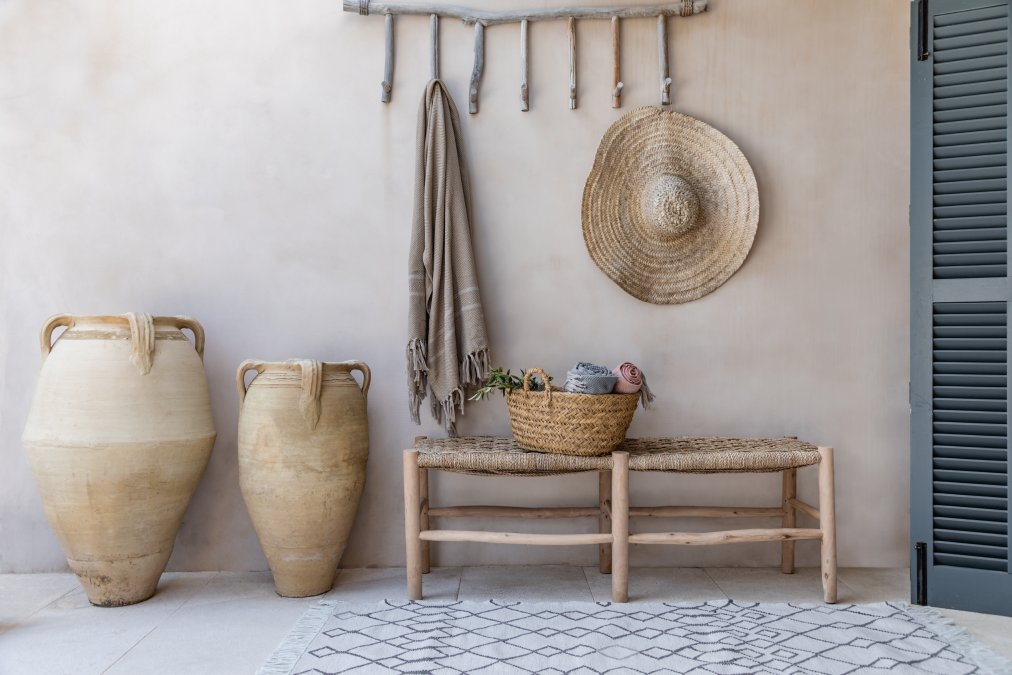
Material Composition: From Plastic Bottles to soft woven rugs
Most recycled rugs are woven from recycled polymers, chiefly PET recovered from plastic bottles. The bottles are cleaned, shredded into flakes, melted, and extruded into filament yarn. That yarn is then spun and woven on traditional looms into a pile that behaves much like wool.
Recycled PET is a synthetic fibre, so it does not absorb spills the way natural fibres do. That single property drives most of the practical benefits below.
Manufacturing Process and Ethical Production
Handwoven production is slower and more labour-intensive than machine tufting, which is a large part of the cost difference. Ethical manufacturing means paying weavers properly, controlling dye chemistry, and keeping production runs small enough to maintain quality.
Benefits of Recycled PET Rugs: Sustainability Meets Practicality
The benefits of recycled PET rugs sit in two camps: environmental and practical, and the practical ones are what justify the price. Each square metre of recycled PET rug diverts a meaningful number of bottles from landfill, and the same fibre is stain resistant, machine washable, and hard-wearing.
Landfill waste is the core problem. Textiles are one of the slower-degrading streams in municipal waste, and repurposed materials keep that volume in circulation instead of in the ground. Resource conservation works the same way: the feedstock already exists, so no new petroleum is needed for the fibre itself.
On the practical side, the fibre's low absorbency means spills sit on the surface long enough to blot. That is why pet owners and parents of toddlers tend to be the happiest buyers.
Recycled Rug Durability vs Wool: Which Lasts Longer?
Wool wins on maximum lifespan. A well-made wool rug can outlast a recycled PET rug, often by a wide margin, because wool fibres have natural crimp and resilience that resist crushing over decades. Recycled PET wins on cost-per-use in high-traffic areas and wet or outdoor settings, where wool would be ruined long before it wore out. A wool rug in a hallway lasts. A wool rug on a covered deck does not.
The mechanism matters more than the marketing. Wool is a protein fibre with a scaly outer cuticle and a crimped structure that springs back after compression, so it recovers its pile height after furniture and footfall. Recycled PET is a thermoplastic filament: it has no crimp of its own, so resilience comes from how densely the yarn is tufted or woven and how tightly the pile is set. That is why a cheap, loosely woven PET rug flattens in months while a dense handwoven one holds its loft for years. The fibre is not the variable, the construction is.
Comparative Longevity and Cost-per-Use
Those ranges are indicative, not guarantees. A densely woven PET rug in a low-traffic bedroom can comfortably reach the top of its band; a thin flatweave in a hallway with two dogs will land at the bottom. The same logic applies to wool, a hand-knotted wool rug in a formal lounge will outlive its owner, while a cheap tufted wool rug in a mudroom may not see five years.
How to Actually Work Out Cost-per-Use
The maths is simpler than most guides make it. Take the purchase price, divide it by the realistic number of years the rug will survive in the room you are putting it in, and compare that annual figure against the cost of replacing a cheaper rug more often. A rug that costs more upfront but lasts twice as long usually wins, but only if you are honest about the traffic it will face.
A common pattern buyers report: a mid-priced synthetic rug replaced every 18-24 months in a family living room ends up costing more over a decade than a denser recycled PET rug bought once. The recycled rug also avoids the hidden costs of the cheap option, the time spent shopping, the waste, and the fact that a flattened, stained rug is usually replaced before it is worn out.
When Recycled PET Is the Better Buy
Choose recycled PET for family living, pets, and indoor-outdoor versatility, where material integrity under abuse matters more than maximum lifespan. The fibre does not absorb spills, does not support moths, and can be washed at home rather than sent away.
How to Clean Recycled Plastic Rugs (Without Damaging Them)
A workable routine:
- Vacuum both sides weekly on a low setting
- Blot spills immediately with a clean cloth, do not rub
- For deeper cleaning, wash on a 40 degree cycle with mild detergent
- Skip fabric softener, it coats the fibre
- Air dry flat or hanging, away from direct sun and heaters
- Never tumble dry on heat
For a messy household, machine washable is the feature that pays for itself. A rug you can actually wash beats a rug you are afraid to.
Health, Safety, and Indoor Air Quality: What You Need to Know
New synthetic textiles can off-gas volatile organic compounds, and recycled PET is no exception, though the effect is usually short-lived.
Texture, Comfort, and the 'Plastic' Myth
Indoor vs Outdoor: Weather Resistance and UV Protection
A well-made recycled PET rug can work indoors and out, which is where it beats almost every natural alternative.
End-of-Life Recyclability and the Circular Economy
Recycled PET rugs are recyclable.
Why a Recycled Rug Is Not Automatically Recyclable Again
The confusion comes from conflating two different things.
Realistic End-of-Life Options
- Repurpose first. A rug that is faded or worn in the middle of a room is often perfectly serviceable cut down for a hallway, a boot room, a garage, or a pet bed.
What to Ask Before You Buy
Frequently Asked Questions
Are recycled plastic rugs durable enough for high-traffic areas?
Yes. Recycled PET rugs are designed to handle busy homes. The woven construction from recycled polymers creates a dense, hard-wearing surface that resists crushing and matting. Unlike natural fibres that can wear thin in walkways, these rugs maintain their material integrity over time, making them a smart choice for hallways, living rooms, and play areas where foot traffic is constant.
Do recycled PET rugs feel like plastic or wool?
They feel like wool. Advances in textile manufacturing mean recycled PET is spun into soft, cosy yarn that mimics the warmth and texture of natural wool. You won't feel like you're walking on a tarp. Many people are surprised by the plush, inviting feel underfoot, which is why these rugs work well in bedrooms and lounges where comfort matters.
How do you clean and maintain recycled plastic rugs?
Most recycled plastic rugs are machine washable on a gentle cycle, which makes them ideal for pet owners and families. For everyday upkeep, vacuum regularly and spot-clean spills with mild soap and water. Their stain-resistant and water-repellent properties mean messes lift easily. Always check the care label, but generally, these rugs are far easier to maintain than wool or cotton.
Are recycled rugs actually better for the environment?
They divert plastic bottles from landfill and reduce demand for virgin materials. Each rug repurposes hundreds of bottles, cutting landfill waste and lowering the carbon footprint compared to conventional rug production. Choosing a recycled rug is a sustainable choice that supports resource conservation and the circular economy, though end-of-life recyclability varies by manufacturer.